
A tripping breaker is one of the most common reasons people call an electrician. It is also one of the most misunderstood. A breaker that switches off is not the problem — it is the device doing its job and protecting your wiring from damage. The real question is why it is tripping.
How circuit breakers and RCDs protect you
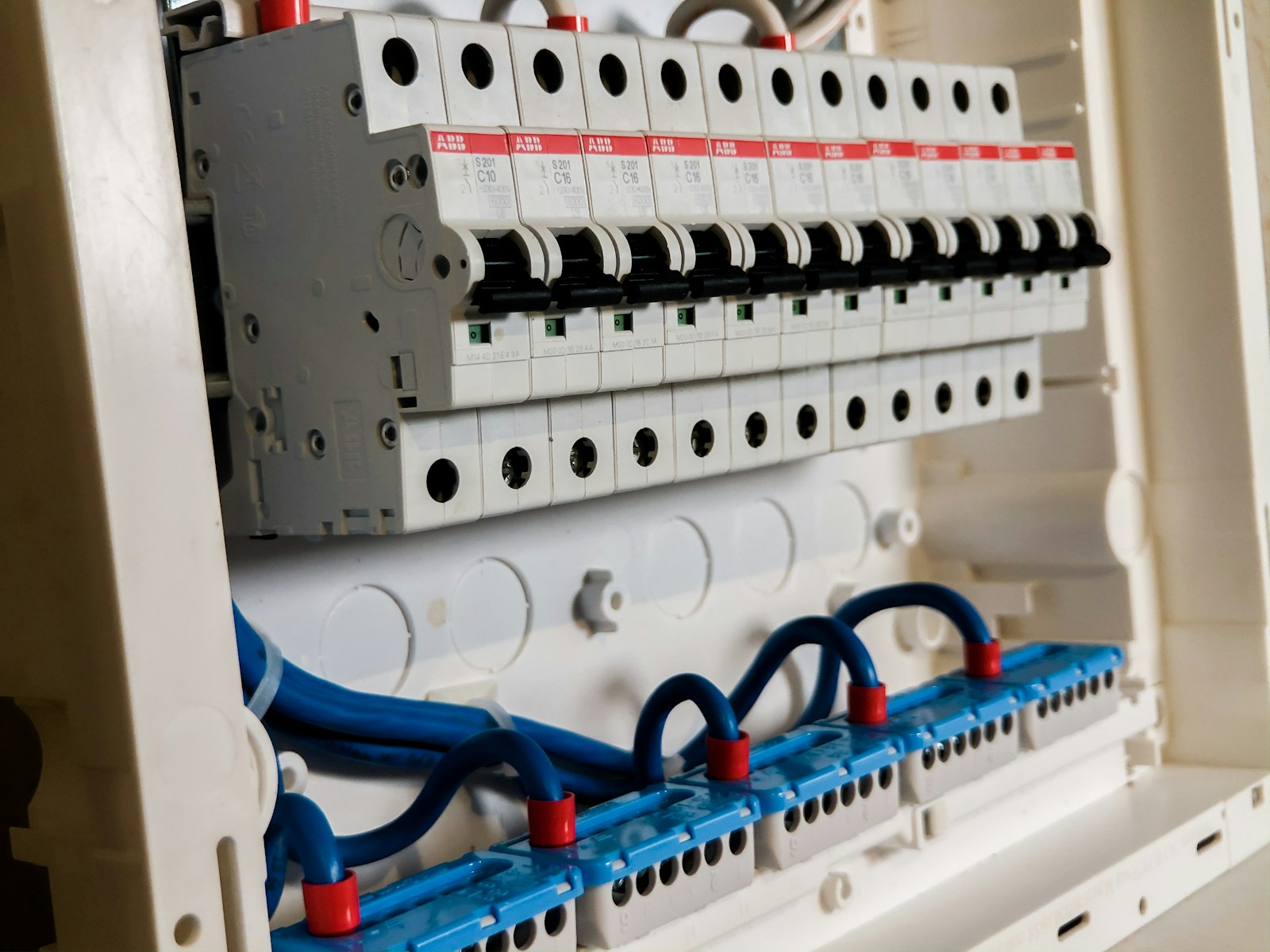
Most modern distribution boards contain two types of protection. Miniature circuit breakers (MCBs) switch off when too much current flows through a circuit, protecting the cable from overheating. Residual current devices (RCDs or RCCBs) switch off when they detect current leaking to earth — for example through damaged insulation or a person touching a live part. Knowing which device tripped is the first clue.
Cause 1: Circuit overload
An overload happens when appliances on one circuit draw more current than the breaker is rated for. Typical examples include running an iron, a kettle and a heater on the same kitchen circuit, or connecting a large air conditioner to a socket circuit not designed for it.
Signs: the MCB trips after appliances have been running for a while, and resets normally once some are switched off.
Fix: spread heavy loads across different circuits, and have dedicated circuits installed for high-power appliances such as air conditioners and water heaters.
Cause 2: Short circuit
A short circuit occurs when a live conductor touches neutral or another conductor, causing a very high current. It can result from damaged cable, a loose connection inside an outlet, a nail through a wire or a fault inside an appliance.
Signs: the breaker trips instantly, sometimes with a bang or a visible spark, and trips again immediately when reset.
Fix: do not keep resetting. The faulty cable, accessory or appliance must be located and repaired by an electrician.
Cause 3: Earth leakage
Earth leakage trips the RCD when current escapes to earth. Moisture in an outdoor socket, a failing water-heater element or deteriorated insulation are frequent culprits.
Signs: the RCD trips, often during rain or when a particular appliance is used.
Fix: unplug appliances one by one to see whether a single item is responsible. If the RCD still trips with everything unplugged, the fault is in the fixed wiring and needs professional testing.
Cause 4: A worn-out breaker
Breakers can weaken with age and heat, tripping below their rated current. This is less common than the causes above, and should only be concluded after the circuit has been tested.
A safe way to narrow it down
- Note which device tripped and what was running at the time.
- Switch off and unplug appliances on that circuit.
- Reset the breaker once. If it trips immediately with nothing connected, stop and call an electrician.
- If it holds, reconnect appliances one at a time to see which one causes the trip.
Never tape a breaker in the on position or replace it with a higher rating to stop the trips. That removes the protection without removing the danger.
When to call an electrician
Call a professional if the breaker trips with nothing plugged in, if you smell burning, if the board or an outlet is warm, or if the trips keep returning. Our electrical repair service uses insulation resistance and continuity testing to find the exact fault rather than guessing.
If tripping started after you added new appliances, you may need extra circuits. See how we plan dedicated appliance circuits.
Breaker still tripping? Request a service visit and we will trace the cause properly.